

2026 Seminar Series
LIBERTY

Dietrich von Hildebrand's Cooperative Freedom: Understanding Freedom as Self-Donation
Dr. Alexander Montes
University of Rochester
Thursday, September 24 at 7 pm
School of Pharmacy, Room 129
St. John Fisher University

In this talk, I argue that Dietrich von Hildebrand, a student of Edmund Husserl (the father of phenomenology) and strident opponent of Nazism, provides a unique answer to the age-old question of how freedom, which seems to involve doing what we want without restraints, can be reconciled with morality, which imposes such restraints. This unique answer is best brought out in contrast to the more famous but problematic answer Immanuel Kant gives to the same question. Kant identifies freedom with autonomy, with the tragic consequence that freedom is either closed to the experience of the Other, or it becomes detached from morality, a law unto itself. By contrast, Hildebrand’s analysis of freedom shows that freedom is rather what I will term the autonomous assumption of heteronomy. Freedom is giving one’s fiat, “let it be,” to being moved by a potential motive that is essentially distinct from one, outside of oneself. This unifies freedom with affective love in a way that is not possible for Kant. For Hildebrand, freedom is ultimately found in self-donation and cooperation with the deepest stirrings of our heart, and, ultimately, the grace of God.
UPCOMING TALKS
Dr. Stephen Loughlin, St. Bernard's STM.
Thursday, October 22
Dr. Heather Rabenberg, SUNY Brockport.
Thursday, November 12

Militarism & Freedom
Dr. Stephen Sims
Associate Professor, Political Science
Rochester Institute of Technology
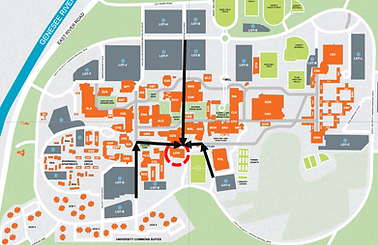
Saturday, April 11 at 11 am
Max Lowenthal Hall
Room 3105
RIT
Dr. Sims will argue that the project of liberal hegemony seeks to eliminate war in order to secure individual freedom, but in doing so risks eliminating politics itself by removing real conflict and meaningful collective decision-making. Drawing on Aristotle and Plato, he proposes that genuine political life, and thus human flourishing, requires the possibility of real conflict, best preserved in a world of competing powers rather than a single, pacified global order.

An outstanding collection of films, maps and documents to commemorate our nation's 250 anniversary

Seminars are free and open to the public
Students that attend the series may request a certificate of completion
Previous Seminar Series: Intersections (2022) Beauty (2022-2023) Happiness (2024). Reality (2025)
For more information write to: contact@agathoninstitute.org